
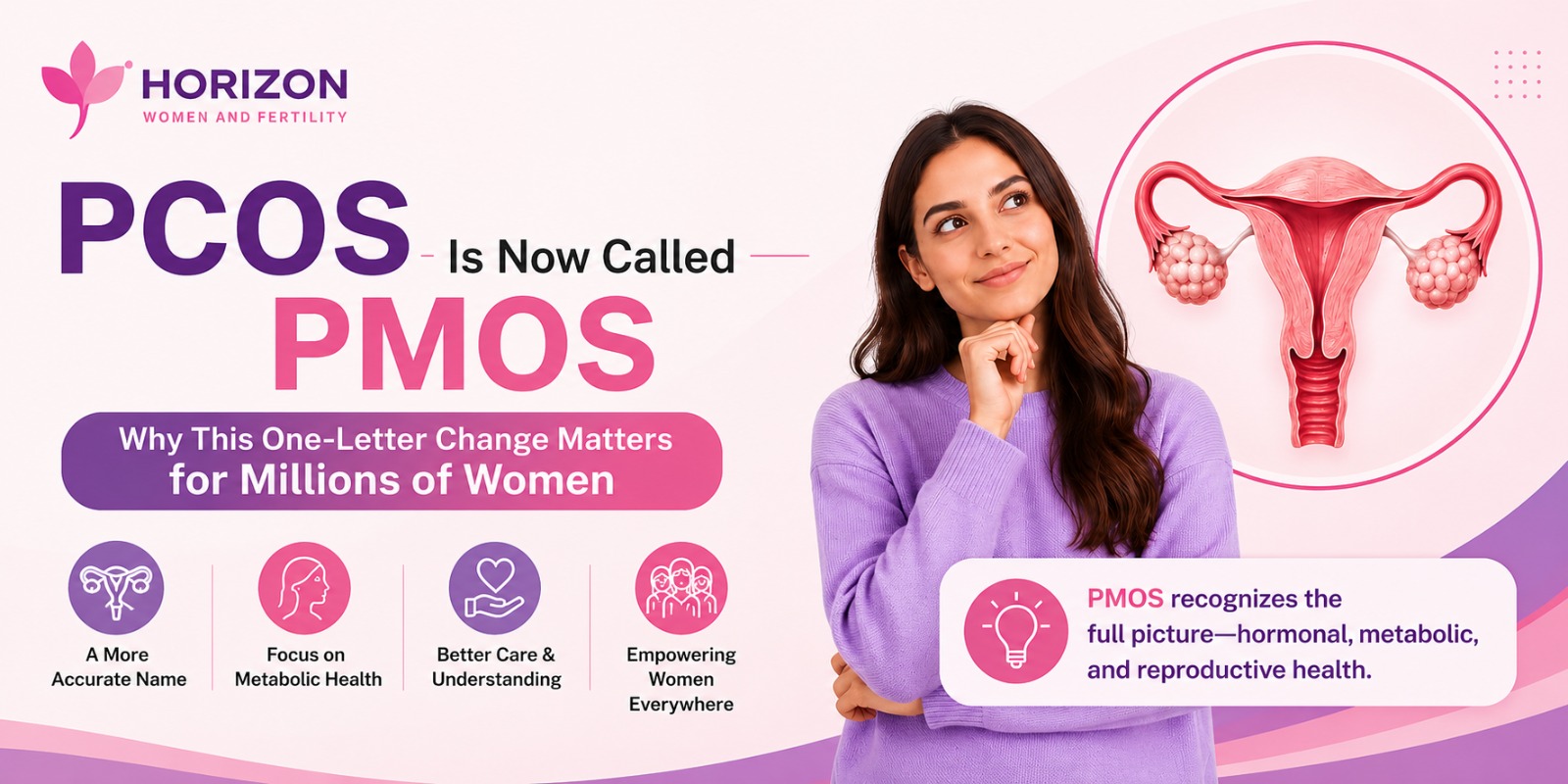
PCOS Is Now Called PMOS — Why This One-Letter Change Matters for Millions of Women
By Dr. Lavanya Bommakanti, MBBS, MS (OBG), MRCOG (UK), FRM
Consultant Fertility Specialist & Gynaecologist, Horizon Women & Fertility, Banjara Hills, Hyderabad
If you’ve been diagnosed with PCOS or suspect you may have it, you’ve probably come across recent news about a major change in women’s health. In May 2026, a landmark paper published in The Lancet officially renamed Polycystic Ovary Syndrome (PCOS) to Polyendocrine Metabolic Ovarian Syndrome (PMOS). The change has been endorsed by both the American Society for Reproductive Medicine (ASRM) and the European Society for Human Reproduction and Embryology (ESHRE).
At first glance, it may seem like only one word has changed. But in reality, this new name reflects a much deeper understanding of the condition and could significantly improve how women are diagnosed, treated, and supported throughout their lives.
As a fertility specialist and gynaecologist who has been managing PCOS for more than 15 years, I believe this change is long overdue.
Why Was the Name PCOS a Problem?
For years, the term Polycystic Ovary Syndrome created confusion. Many women assumed the condition was simply about having cysts in the ovaries. In reality, the so-called “cysts” seen on ultrasound are not true cysts at all. They are small follicles or immature eggs that haven’t completed their development.
The old name often led to misunderstandings. Women whose ultrasound scans appeared normal were sometimes told they didn’t have PCOS, despite having all the other symptoms. At the same time, the focus remained heavily on the ovaries while the underlying hormonal and metabolic issues were overlooked.
The result? Delayed diagnosis, incomplete treatment, and unnecessary frustration for many women.
The new name, PMOS, better reflects what doctors have known for years: this condition affects much more than the ovaries.
What Does PMOS Mean?
Every word in the new name serves a purpose.
Polyendocrine
PMOS affects multiple hormonal systems throughout the body. It is not limited to ovarian hormones alone.
Women with PMOS may experience disruptions involving:
- Insulin
- Testosterone and other androgens
- LH and FSH hormones
- Brain-to-ovary hormonal signaling
These hormonal imbalances influence everything from menstrual cycles to fertility, skin health, and metabolism.
Metabolic
This is perhaps the most important addition to the name.
Many women with PMOS have insulin resistance, even if they are not overweight. Over time, insulin resistance can increase the risk of:
- Type 2 diabetes
- Gestational diabetes
- High blood pressure
- Abnormal cholesterol levels
- Cardiovascular disease
The word “metabolic” reminds both doctors and patients that PMOS is not just a reproductive condition—it is also a long-term metabolic health condition.
Ovarian
The ovaries remain an important part of the syndrome because they play a key role in ovulation, menstrual cycles, and hormone production.
However, the new name acknowledges that ovarian changes are only one piece of a much larger picture.
Syndrome
PMOS remains a syndrome because symptoms vary widely from woman to woman. No two patients experience the condition in exactly the same way.
What Does PMOS Mean for Irregular Periods?
One of the most common symptoms of PMOS is irregular periods.
Many women experience menstrual cycles that are unpredictable or absent for months at a time. This happens because hormonal imbalances interfere with regular ovulation.
The PMOS framework shifts attention toward the root cause of these irregular cycles. In many cases, insulin resistance plays a major role.
Rather than focusing only on managing symptoms, treatment now emphasizes improving insulin sensitivity through:
- Lifestyle modifications
- Regular exercise
- Nutritional changes
- Metformin
- Inositol supplementation
For many women, addressing insulin resistance can help restore regular ovulation and improve menstrual cycle regularity naturally.
What Does PMOS Mean for Fertility?
PMOS affects approximately 1 in 8 women worldwide and remains one of the leading causes of female infertility.
The encouraging news is that PMOS-related infertility is highly treatable.
When evaluating fertility, we now look beyond the ovaries and consider the entire hormonal and metabolic picture, including:
- Insulin resistance
- AMH levels
- Weight history
- Ovulation patterns
- Thyroid function
Many women begin ovulating naturally once insulin sensitivity improves.
When fertility treatment is required, letrozole is now considered the preferred first-line medication for ovulation induction. Other options such as IUI and IVF remain highly effective when appropriate.
With proper evaluation and individualized treatment, many women with PMOS successfully achieve pregnancy.
PMOS, Acne, Excess Hair Growth and Acanthosis Nigricans
For younger women, skin-related symptoms are often the first signs of PMOS.
Elevated androgen levels can cause:
- Persistent acne
- Facial hair growth (hirsutism)
- Excess body hair
- Thinning scalp hair
These symptoms are often dismissed as cosmetic concerns, but they are important hormonal indicators.
Another common sign is acanthosis nigricans—dark, velvety skin patches that typically appear around the neck, underarms, or inner thighs.
Acanthosis nigricans is a strong marker of insulin resistance. When it occurs alongside irregular periods, it often points toward PMOS.
The encouraging aspect of the PMOS approach is that treating the underlying metabolic dysfunction frequently improves multiple symptoms at the same time, including menstrual irregularities, acne, fertility concerns, and excess hair growth.
Why Long-Term Health Matters
Historically, many women had PCOS treatment when they wanted to regulate their periods or conceive.
The PMOS model encourages a broader and more proactive approach.
Women with PMOS face a higher lifetime risk of:
- Type 2 diabetes
- Gestational diabetes
- High blood pressure
- Elevated cholesterol
- Cardiovascular disease
This does not mean these outcomes are inevitable.
It simply means women deserve regular monitoring, early intervention, and ongoing support to reduce those risks.
A comprehensive PMOS management plan should include:
- Blood sugar monitoring
- Lipid profile assessments
- Blood pressure checks
- Hormonal evaluations
- Lifestyle counseling
- Weight management support when appropriate
Does Your Diagnosis Change?
If you’ve already been diagnosed with PCOS, you do not need a new diagnosis.
The condition itself has not changed.
The established diagnostic criteria—including irregular periods, elevated androgen levels, and polycystic ovarian morphology on ultrasound—remain the same.
What changes is the way healthcare providers approach your care.
A diagnosis of PMOS should encourage a more comprehensive evaluation that includes reproductive, hormonal, metabolic, and long-term health considerations.
A More Complete Understanding of Women’s Health
The decision to rename PCOS to PMOS followed more than a decade of global consultation involving healthcare professionals, researchers, and over 22,000 individuals affected by the condition.
The message is clear: this condition has always been about much more than the ovaries.
The new name acknowledges the complex hormonal and metabolic factors involved and helps remove many of the misconceptions that have surrounded PCOS for decades.
A Note From My Practice
Throughout my career, I have treated women at every stage of life—from teenagers struggling with irregular periods and acne to women seeking fertility treatment and those managing long-term metabolic health concerns.
At Horizon Women & Fertility, Hyderabad, the best fertility clinic , our approach has always focused on understanding the complete picture. We evaluate hormonal health, insulin resistance, AMH levels, thyroid function, menstrual history, fertility goals, and lifestyle factors before creating an individualized treatment plan.
The transition from PCOS to PMOS reinforces what many fertility specialists and gynaecologists have long understood: this is a whole-body condition that requires whole-person care.
Whether you’re searching for a PCOS specialist in Hyderabad, seeking answers about irregular periods, struggling with acne or insulin resistance, or wondering if you can conceive with PMOS, the outlook is often very positive with the right diagnosis, guidance, and treatment plan.
Dr. Lavanya Bommakanti Consultant Fertility Specialist & Gynaecologist
Conclusion
The shift from PCOS to PMOS signifies a lot more than just a renaming process. It shows how much we have learned about the disease which impacts the hormone levels, metabolism, reproductive system and general well-being of those affected by it. Seeing PMOS as an ailment which affects the whole body and not just the ovaries helps doctors in providing patients with more thorough care. If diagnosed on time and treated properly, the majority of PMOS patients will be able to cope with their symptoms and safeguard their future health and fertility.
FAQs
-
PMOS (Polyendocrine Metabolic Ovarian Syndrome) is the new term for PCOS (Polycystic Ovary Syndrome). The condition itself hasn’t changed, but the term describes the hormonal and metabolic features of the syndrome, as opposed to the ovarian component only.