
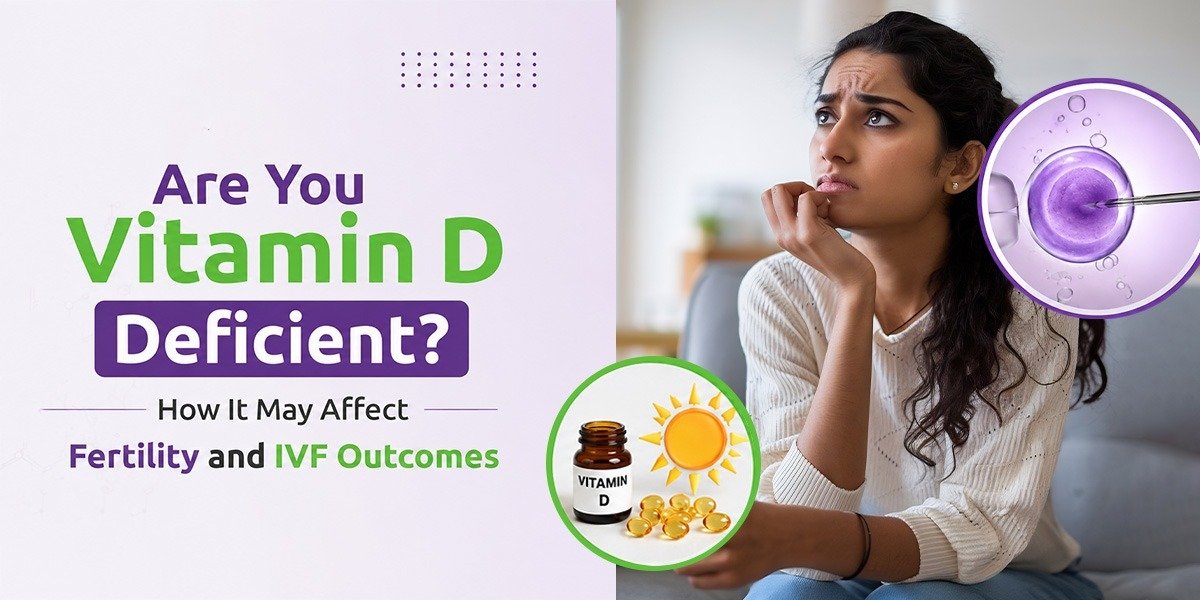
Are You Vitamin D Deficient? How It May Affect Fertility and IVF Outcomes
By Dr. Lavanya Bommakanti | MBBS MS(OBG) MRCOG(UK) FRM
Consultant Fertility Specialist & Gynaecologist, Horizon Women & Fertility, Banjara Hills, Hyderabad
Here is something that surprises almost every patient we tell it to: India is one of the sunniest countries on earth, and yet vitamin D deficiency affects an estimated 70 to 90 percent of the Indian population. In Hyderabad, where the sun shines for more than 300 days a year, the majority of the women sitting in my clinic are deficient in a vitamin that our bodies are supposed to make from sunlight alone.
The explanation — indoor work environments, sun-protective clothing, darker skin pigmentation that requires longer sun exposure to produce the same vitamin D, and a diet that contains very few natural sources of this vitamin are the realities of modern urban Indian life. The sun is there. Our bodies are just not getting access to it.
For most health conditions, vitamin D deficiency is a background risk factor. For women who are trying to conceive or preparing for IVF, it is something we actively screen for and address. Because the evidence connecting vitamin D status to fertility, IVF success, and pregnancy outcomes is substantial, and supplementation is one of the safest and most affordable interventions we have in reproductive medicine.
For women looking for the best fertility centre in Hyderabad, understanding and addressing factors such as vitamin D deficiency can be an important part of comprehensive fertility care.
What Does Vitamin D Actually Do in the Body?
Most people know vitamin D for bone health. What fewer people know is that vitamin D is not just a vitamin — it functions more like a hormone, acting through receptors present in nearly every tissue in the body, including the ovaries, uterus, endometrium, and placenta.
For fertility specifically, vitamin D plays several roles:
→ It regulates the genes responsible for preparing the uterine lining to receive an embryo
→ It supports follicle development in the ovaries and influences egg quality
→ It has anti-inflammatory effects that matter for implantation
→ It plays a role in immune tolerance — the process by which the body accepts a pregnancy rather than rejecting it
→ It influences insulin sensitivity, which is directly relevant for women with PCOS
When levels are low, each of these processes is subtly impaired. No single one causes infertility on its own — but together, they create a less-than-optimal environment for conception and early pregnancy.
Choosing a best fertility clinic is not only about the IVF procedure itself. A complete fertility evaluation also considers nutritional, hormonal, metabolic, and reproductive factors that may influence treatment outcomes.
What the Research Shows
A 2025 study in Frontiers in Endocrinology, examining 613 women with PCOS undergoing their first IVF cycle, found that clinical pregnancy rates were significantly lower in vitamin D-deficient patients — 58.3% versus 67.1% in those with adequate levels. Women with vitamin D above 20 ng/mL were 1.48 times more likely to achieve a clinical pregnancy, even after adjusting for endometrial thickness and other variables.
The mechanism matters here. Vitamin D deficiency is associated with reduced expression of the HOXA10 gene — a key gene that drives the differentiation of endometrial cells and prepares the uterine lining for implantation. In plain terms: without adequate vitamin D, the uterus may be less receptive, even if the embryo is chromosomally normal and the lining looks adequate on scan.
A 2025 multicenter study found that women with PCOS who are vitamin D deficient have close to a 40 percent lower chance of achieving a live birth, and a higher rate of early pregnancy loss — a finding with significant implications for how we manage PCOS patients before fertility treatment.
Ensuring adequate levels are already present before treatment begins is even more helpful than correction after the stimulation protocol has already started.
Vitamin D, PCOS, and Fertility — A Particularly Important Connection
Women with PCOS are more affected by vitamin D deficiency — and the effects are compounded. Vitamin D influences insulin sensitivity, and insulin resistance is one of the central metabolic drivers of PCOS. Low vitamin D worsens insulin resistance; improving vitamin D status is one of the tools — alongside metformin and lifestyle changes — that can help restore more regular ovulation.
For PCOS patients preparing for ovulation induction or IVF, we routinely check vitamin D as part of the pre-treatment workup. It is a small addition to the blood panel, but the implications for treatment response and pregnancy outcomes are meaningful — particularly in women who have already had one or more failed cycles without an obvious explanation.
This comprehensive approach is one of the factors patients often look for when choosing a best fertility hospital or a top fertility center for their fertility journey.
Vitamin D and Male Fertility — Often Missed, Equally Important
Vitamin D deficiency doesn’t only affect the female partner. Vitamin D receptors are present in testicular tissue, sperm cells, and the male reproductive tract, and low levels have been associated with reduced sperm motility, poorer morphology, and lower total sperm count. More relevantly for ART outcomes, vitamin D deficiency in men has been linked to higher sperm DNA fragmentation — the same molecular sperm damage we test for with DFI.
At Horizon Fertility Center, we check vitamin D in both partners as part of our fertility workup. Optimising levels in the male partner, alongside antioxidant therapy where indicated, is how we approach the couple’s fertility.
How Do You Know If You’re Deficient?
A simple blood test — 25-hydroxyvitamin D, or 25(OH)D — tells you your current level. The results are interpreted as:
→ Below 20 ng/mL: Deficient — requires treatment
→ 20 to 29 ng/mL: Insufficient — should be optimised before fertility treatment
→ 30 ng/mL and above: Sufficient — associated with better reproductive outcomes
In a fertility context, we aim for levels of 40 to 60 ng/mL before IVF — not just the minimum threshold. There is a difference between “not deficient” and “optimal.”
Can You Get Enough from Sunlight and Diet?
In theory, yes. In practice, for most urban women — not really.
To produce meaningful vitamin D from sun exposure, you need direct sunlight on unprotected skin for 20 to 30 minutes daily, ideally between 10am and 2pm, without sunscreen. For most working women, that may not be practical. Dietary sources — fatty fish, egg yolks, fortified milk — are sparse in the typical Indian diet and provide only modest amounts. This is why supplementation is often necessary.
The good news is that vitamin D supplementation is inexpensive, widely available, and safe at standard doses. The standard treatment for deficiency is typically 60,000 IU weekly for 8 to 12 weeks, followed by daily maintenance dose. Levels should be re-checked after supplementation to confirm they have reached the target range.
What We Check at Horizon Women & Fertility
At Horizon Women & Fertility, vitamin D is part of our standard pre-fertility and pre-IVF blood panel — alongside AMH, thyroid, insulin, and hormonal workup. This is because optimal fertility outcomes depend on the whole body being in the best possible state before treatment begins, not just the reproductive organs in isolation.
In fifteen years of fertility practice, we have seen the difference that addressing nutritional deficiencies makes — not as a replacement for medical treatment, but as a foundation that makes treatment work better. Vitamin D is not a magic supplement. But going into an IVF cycle with levels of 15 ng/mL when you could have had levels of 50 ng/mL with a simple correction three months earlier is a missed opportunity that costs nothing to address.
For couples looking for the best fertility center or a trusted fertility hospital in Hyderabad, a personalised approach that considers factors such as vitamin D status, PCOS, hormonal health, egg quality, sperm health, and overall reproductive health can be important.
If you are trying to conceive naturally, planning IVF, or have had an unexplained failed cycle — ask your doctor to check your vitamin D level. It is one of the simplest things we can optimise, and in a population where deficiency is the norm rather than the exception, it is one of the most commonly overlooked.